Houthi rebels from Yemen waded into the Iran war over the weekend – which experts had predicted will happen – and potentially delivered a second shock to global seaborne crude oil trade impacted by the Strait of Hormuz blockade.
The Houthis – a heavily armed, Iran-backed militia claiming to represent a Shia minority – earlier warned Israel their ‘fingers are on the trigger’. They pulled it Saturday and fired missiles at Israeli military sites.
Their entry “marks a serious and deeply concerning escalation”, experts said.
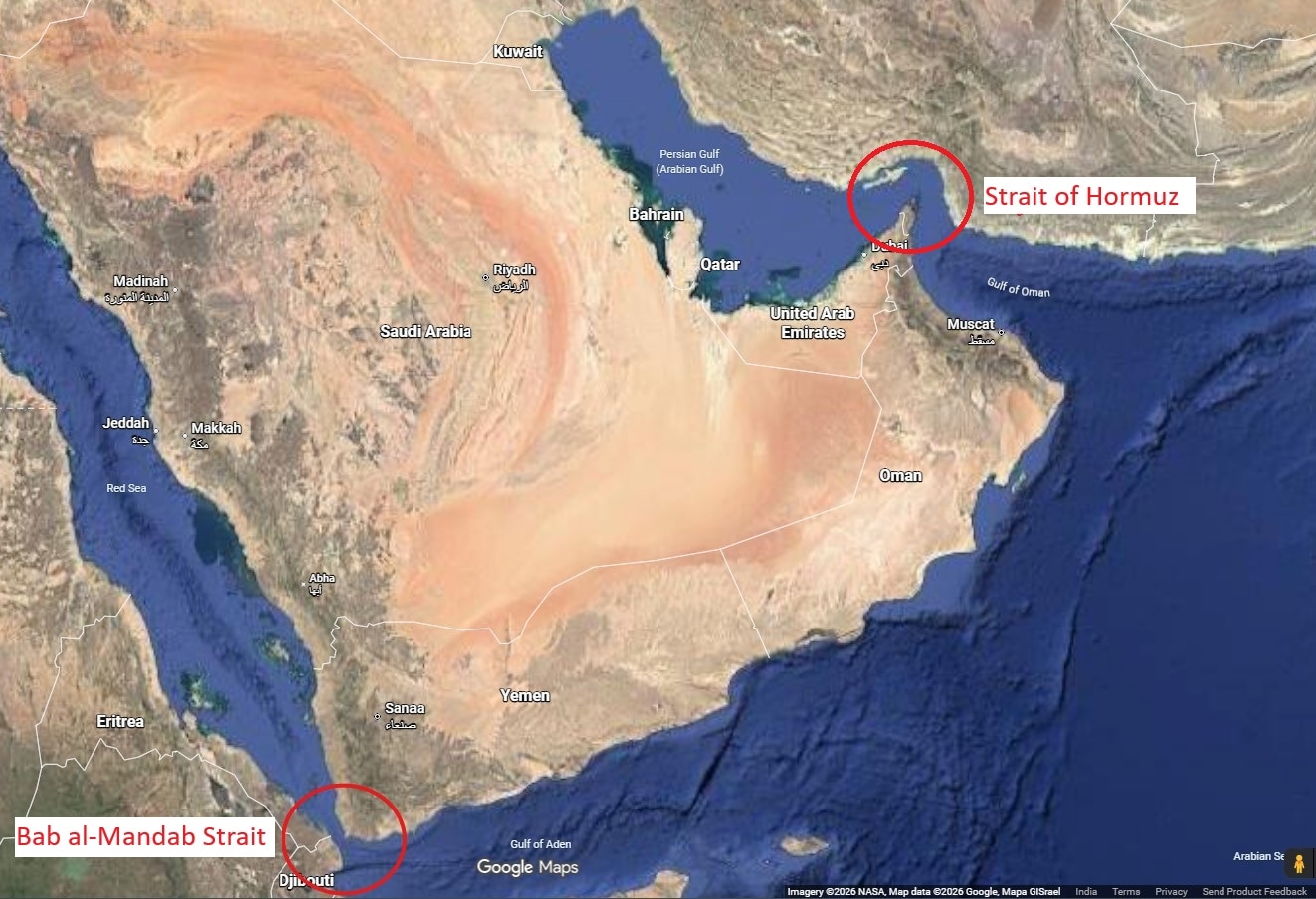
The Houthis control parts of Yemen’s western coastline, including the Red Sea port city of Hodeidah and occupy mountain strongholds overlooking that body of water. This means they threaten shipping through the Bab al-Mandab Strait – on the opposite end of the Arabian Peninsula and Strait of Hormuz – which connects the Red Sea to the Indian Ocean.
As of now there is no specific Houthi blockade; the strait is open to all vessels, including those flying the American or Israeli flags. And there has been no Houthi comment suggesting a blockade. But there is now that danger.
If they begin targeting Israeli forces now, it signals a) a layering of the battlefield that complicates ongoing peace talks, and b) that Iran has a chokehold on regional seaborne oil trade – a combined 30 to 35 per cent – and is squeezing it shut.
Iran, meanwhile, has also floated such a possibility; an unnamed Iran official told Al Jazeera attacks on islands – a likely reference to talk of US ground attacks on Kharg Island – could prompt Tehran to open a new front at the Bab al-Mandab.
The Bab al-Mandab: the other strait
Pre-Iran war, and before late-2023 Houthi strikes on shipping lanes, ten to 12 per cent of the world’s seaborne crude shipped via the Bab al-Mandab. Early 2023 peak flows were between 8.7 and 9.3 million barrels daily.
By mid-December 2023 analysts from S&P Global said tonnage transiting the strait dropped by over 50 per cent, and that some shipping firms had re-routed traffic via the Cape of Good Hope.
Shipping via the Bab al-Mandab continued to be impacted over 2024 and 2025.
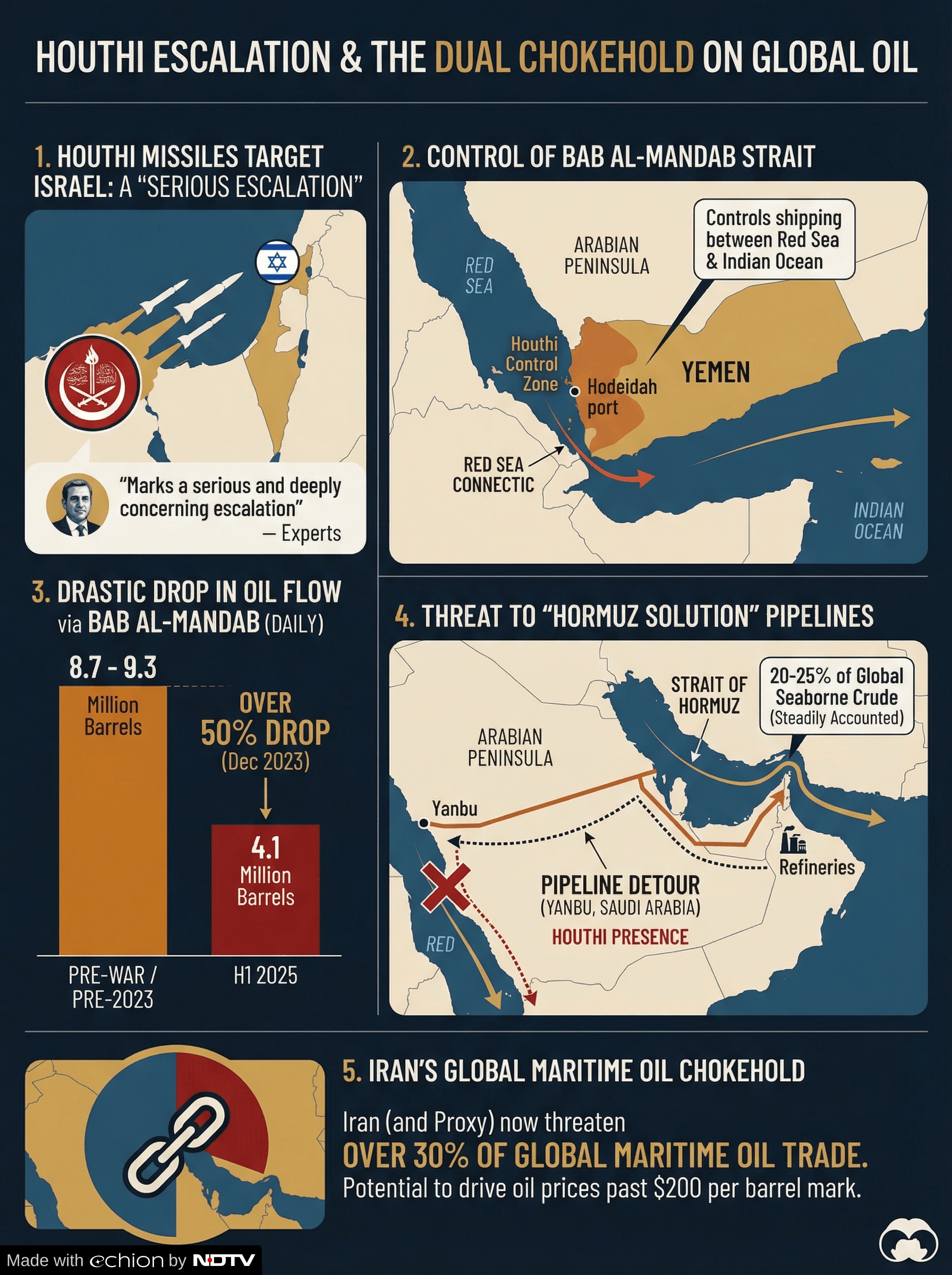
A possible Iran, Houthis two-strait chokehold.
By the first half of 2025 only 4.1 million barrels passed through it daily.
But volume spiked 21 per cent in the first 28 days of March, CNN said, compared to the same period in February. And it is likely that increase caught the attention of Iran and the Houthis, leading to the latter’s entry into the war.
Re-routing as a result of Houthi activity means ships must sail around the African continent – instead of cutting through the Suez Channel and the Bab al-Mandab Strait – and face a longer and more dangerous voyage, driving up oil and food prices.
This adds up to US$2 per barrel for crude oil freight costs, experts said.
Charter rates for VLCCs, or very large crude carriers, i.e., ships that can carry up to two million barrels of oil and prices for which exceeded US$200,000 per day on Feb 26 on the threat of war – have also skyrocketed since.
In early March ocean shipping news platform TradeWinds said one freight deal – reportedly Middle East to China – had been signed at more than US$425,000 per day, and other even larger deals, as much as US$700,000, were being discussed.
Impact on India?
The good news – India’s exposure is relatively lower in this case.
Between 40 and 50 per cent of crude imports skip the Bab al-Mandab because it comes via the Hormuz.
However, a chunk of those imports have been affected by Tehran’s blockade. The government has shielded the loss by diversifying sources – moving from 27 to 41 sellers – and resumed purchases from Russia. These purchases had been scrapped over US demands as a precondition for signing an interim tariff framework agreement with India.
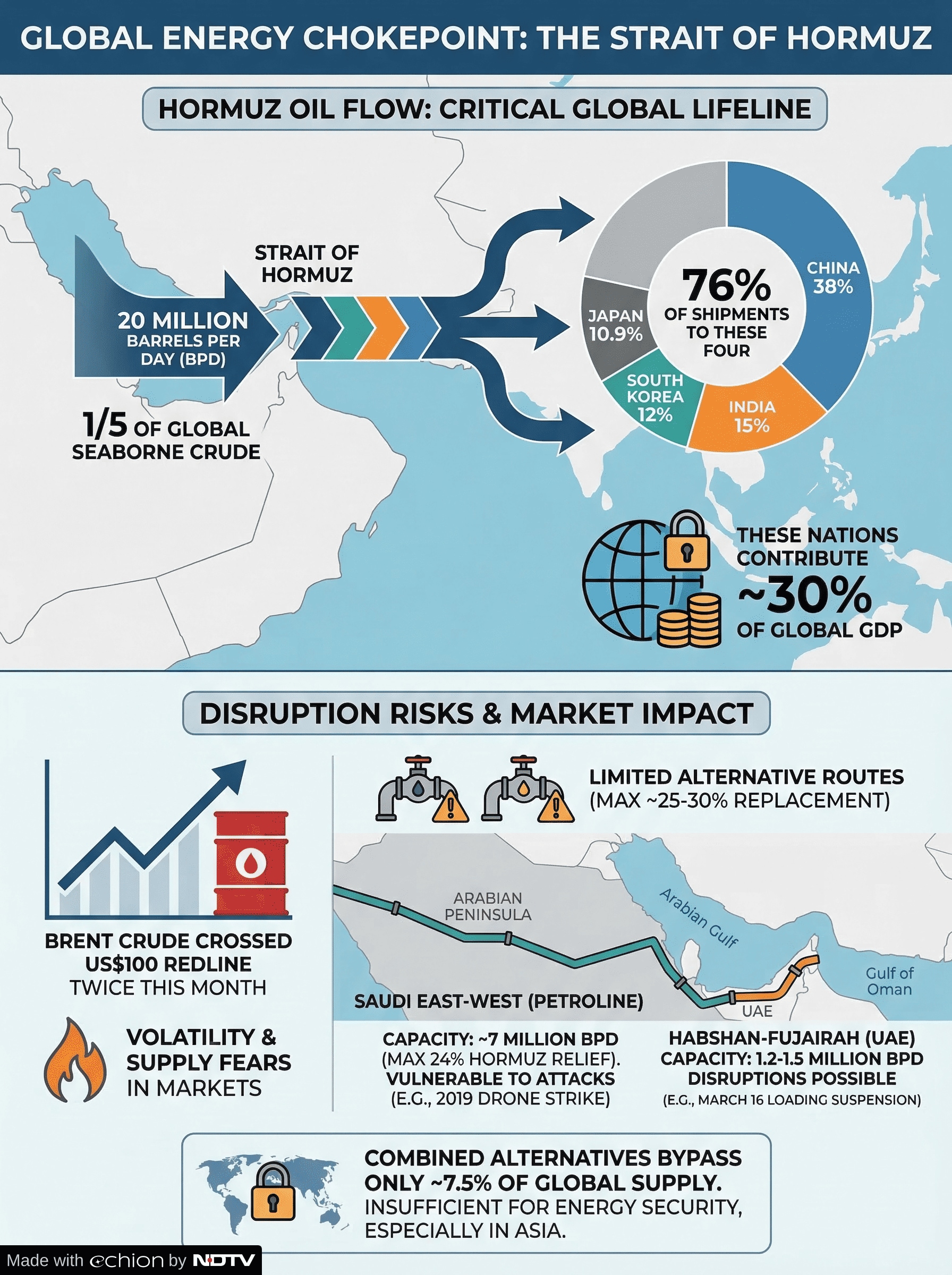
Saudi and UAE pipelines offer marginal relief for Hormuz oil chokehold.
There could, though, be long-term impact because rerouted gas (LNG) from Qatar and crude (via Yanbu) will lift India’s crude basket prices and freight rates.
But in the case of the Bab al-Mandab, the impact is more than just crude oil.
It also ships 15 to 20 per cent of global container traffic, which includes dry bulk cargo – like machinery, food, agriculture products, manufactured goods – between Asia and Europe.
Re-routing arond Africa also makes these more expensive by increasing costs and logistics for manufacturers, causing downstream supply chain disruptions, and adding to inflationary pressure faced by crores of India’s poorer sections.
The Hormuz solution no more?
On the oil trade front, the Hormuz has steadily accounted for 20 to 25 per cent of daily trade, making it much the more important one for the global maritime energy industry.
But wartime pressure there meant Gulf oil exports needed an outlet.
The solution seemed to be pipelines to ship the crude from refineries on the eastern side of the Arabian Peninsula to the west – where it could be loaded on tankers at Yanbu in Saudi Arabia, sail through the al-Mandab, and out of the Middle East.
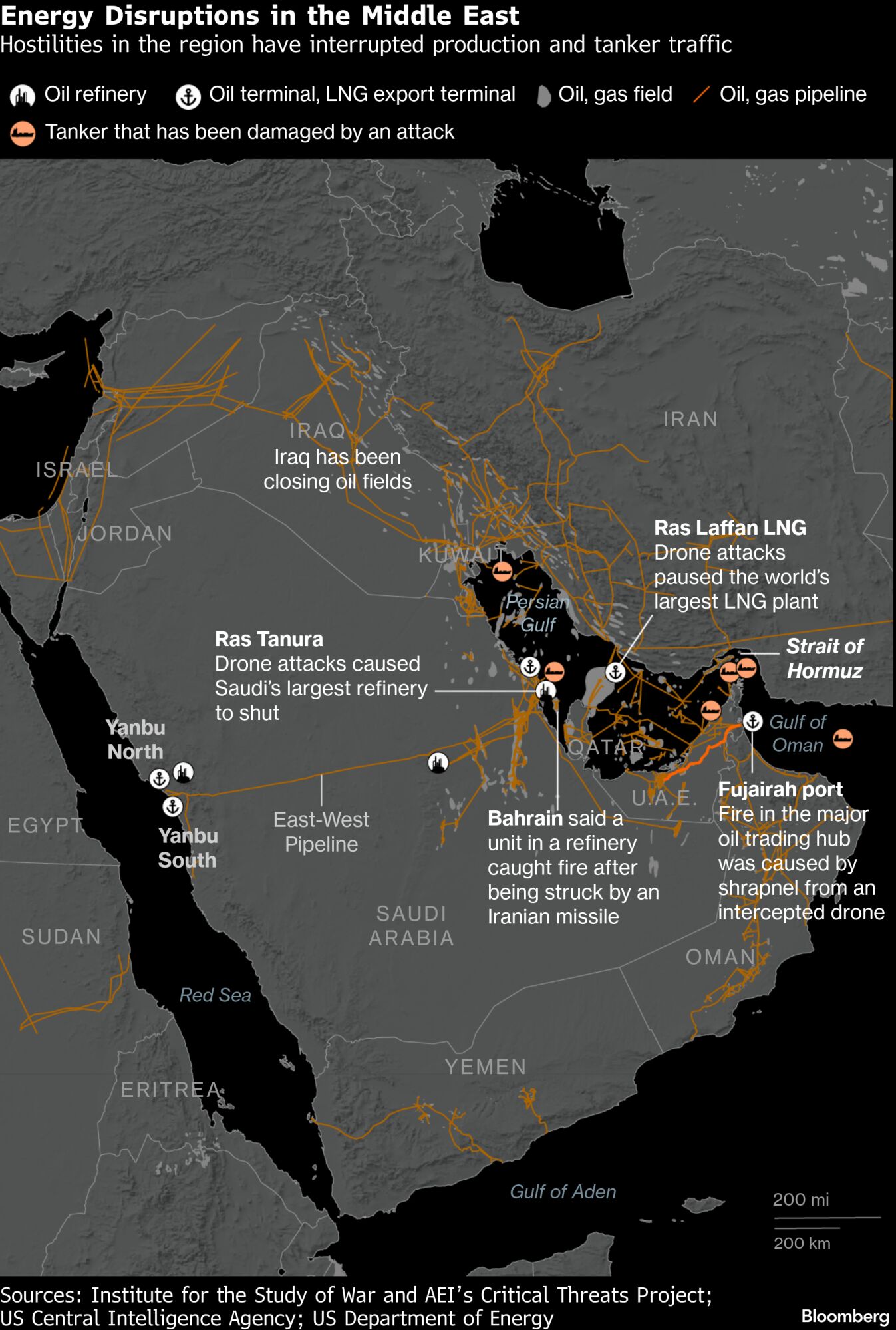
Energy disruptions in the Middle East. Photo: Bloomberg
American broadcaster CNN said 4.6 million barrels of Saudi crude were loaded at Yanbu daily over the past two weeks.
This is marginal compared to the 20 million barrels that ships through the Hormuz daily.
However, in an already sensitive market the potemtial loss of even that 4.6 million barrels can send prices soaring. Brent crude has already breached the US$110 per barrel mark, prompting fuel price hikes in Europe and the United States.
India has held out so far. But the government’s move last week to slash federal excise duties on heavily subsidied petroleum products – to help oil struggling oil marketing companies – suggests even Delhi is nearing an uncomfortable threshold.
Excise Duty On Petrol Cut To Rs 3, Diesel To Zero: Will Fuel Prices Reduce?
The Houthis entering the war complicates that ‘escape’ route.
It also means Iran (and its proxy) now have maritime crude exports from the Gulf in a chokehold, and adds teeth to threats about driving oil prices past the US$200 per barrel mark.
Hormuz Shutdown Affects Asia’s Crude Oil Supply, Pipelines Can’t Cover Loss
In fact, Artem Abramov, head of oil and natural gas research at Rystad Energy, told CNN pressure on the Bab-el-Mandeb Strait, in concert with that on the Hormuz, means Brent is “very likely” to surge past US$150 a barrel in the next few months.
And, as ex-US diplomat Nabeel Khoury told Al Jazeera, “All they (the Houthis) have to do is fire at a couple of ships… and that would lead to the arrest of all commercial shipping through the Red Sea.”
