As IndiGo continues to struggle with massive operational disruptions, many have asked the same two questions – a) if it is cancelling hundreds of flights every day, then how is it still selling tickets, and b) why are fares so high, even on routes where cancellations are widespread?
The answer to both is simple – despite unprecedented cancellations, IndiGo has not grounded its entire fleet or cancelled all of its over 2,200 daily domestic and international flights.
What has happened is this – the airline has been hit by a large-scale schedule disruption concentrated around specific airports and dates; Friday was the worst-hit with over 1,000 flights cancelled, including all domestic IndiGo services departing Delhi for the whole day.
One part (a significant part, yes) of IndiGo’s network is, therefore, in crisis mode.
READ | Aviation Body Withdraws Pilots’ Weekly Rest Order Amid IndiGo Meltdown
But other segments – routes such as Kolkata-Guwahati and Chennai-Coimbatore, and those connecting non-metros – are functional, albeit with delays at reduced frequencies.
And because the entire schedule has not shut down, IndiGo, India’s largest airline continues to sell seats on these flights, which are expected to continue to operate over the next few days.
Cancellations decided only 24-48 hours prior
The truth is airlines rarely cancel flights weeks in advance unless it is a total shutdown.
In IndiGo’s case, the disruptions are being handled on a day-by-day basis, which means while today’s flights may be cancelled, those scheduled to fly three, or even two, days from now remain open for booking on the assumption operations will stabilise.
READ | ‘Less Than 1,000 Cancellations Expected Tomorrow’: IndiGo CEO
IndiGo has also said today’s cancellations today were part of a one-time ‘system reboot’ to reposition aircraft and crew so regular schedules can resume. The expectation is operations will progressively improve, with near-normality targeted between December 10 and 15.
‘Dynamic pricing’? Fares going through the roof
IndiGo controls over half – more than 60 per cent, by some estimates – the domestic commercial aviation market. Its mass-cancellations, therefore, instantly shrink the total number of seats available across all airlines. Demand, however, remains the same.
READ | Delhi-Kolkata Flight Costs More Than UK Round-Trip Amid IndiGo Crisis
This sudden and extreme mismatch – between demand and supply – triggers ‘dynamic pricing algorithms’ that airlines and flight ticket aggregators use, which result in the horrifically expensive fares that have alarmed people since the IndiGo crisis began.
In the past 24 hours
- Delhi-Mumbai one-way fares surged to Rs 50,000; return fares touching Rs 60,000
- Delhi-Bengaluru tickets jumped cost as much as Rs 1 lakh, depending on connections
- Bengaluru-Mumbai tickets, normally capped at Rs 7,000, were listed for Rs 40,000
All of this meant, as many pointed out online, Delhi-London tickets were cheaper!
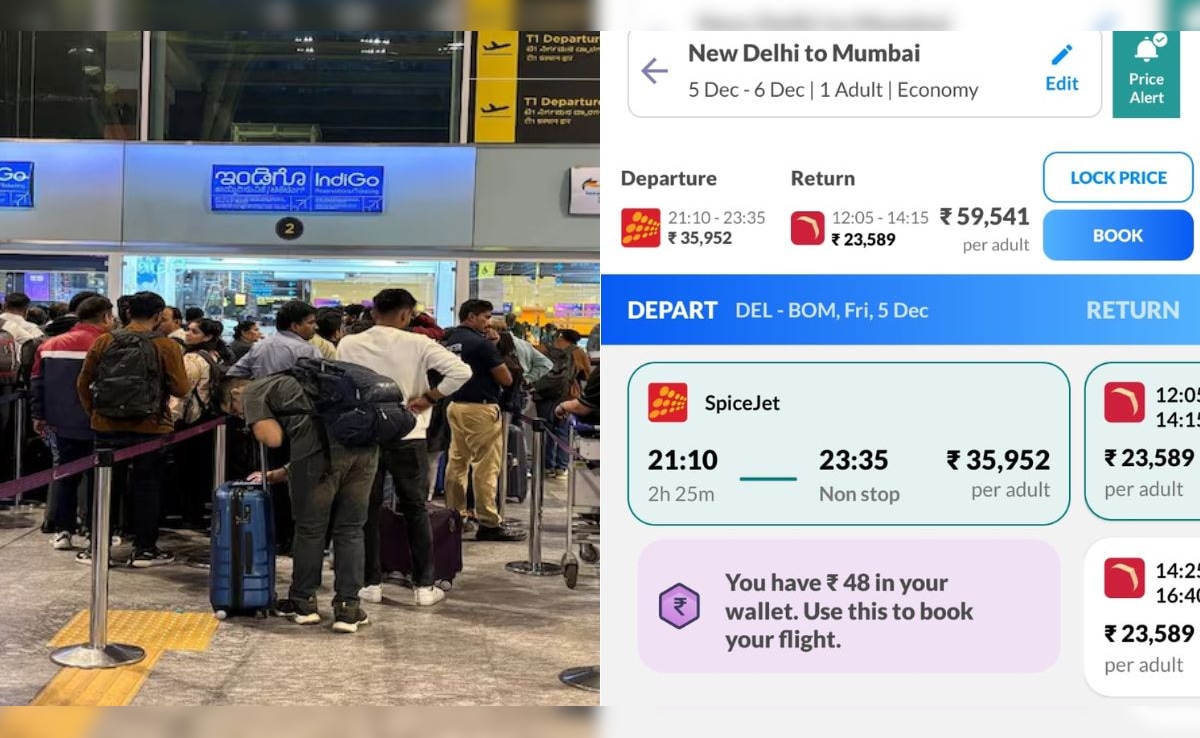
The IndiGo crisis has meant fares for other airlines have skyrocketed
The question that airlines and the government have to be asked, however, is whether these algorithms should be disabled during times of crisis or emergencies, instead of squeezing already hassled more money out of customers who have already paid for a service.
But why are tickets ‘available’ on cancelled flights?
In a period of disruption an airline may continue to offer seats on a flight till crew re-assignment is finalised or till aircraft rotation fails. Only then is it marked ‘cancelled’.
This is standard operating protocol worldwide.
As a result, the airline’s system is designed to keep future flights open unless there is certainty they cannot operate. Shutting down all ticket sales will only happen if IndiGo were to ground itself or if aviation authorities ordered a complete suspension – neither of which has occurred.
What passengers should know
Check flight status before leaving for the airport and make sure, even then, you arrive with time to spare, and expect fares on all airlines to remain elevated until supply normalises.
IndiGo said it expects improvements from Saturday but stabilisation may take till mid-December.
