The familiar image of French citizens marching, striking and challenging political leaders is not just a national stereotype. From medieval peasant uprisings to the French Revolution, the labour movements of the 20th century and the Yellow Vest protests of recent years, protests — which often turn violent — have repeatedly served as a means of expressing grievances that people believe cannot be adequately addressed through ordinary channels.
A man cosplaying Napoleon on the streets, looting at luxury fashion stores like Dior, France is currently confronting one of its most serious episodes of civil unrest in years after protests over deteriorating school conditions, teacher shortages, rising living costs and declining public services descended into violence. The protests have also left a historic town hall partially destroyed by fire, hundreds of police officers injured and nearly 1,800 people arrested across the country.
Further rubbing salt on the wound, right-wing leaders, including US President Donald Trump, have repeatedly fanned the rhetoric that immigration, and immigration alone, is responsible for the current state of affairs in France.
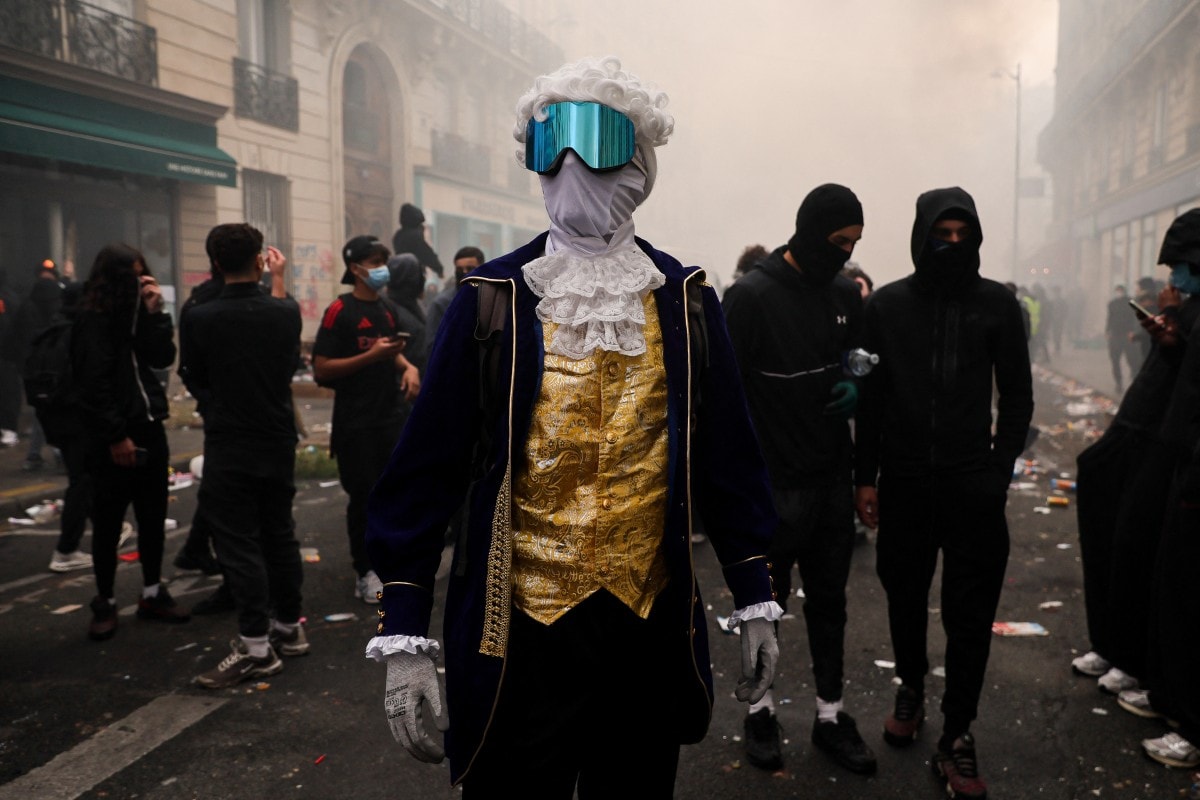
A man cosplaying Napoleon on the streets, looting at luxury fashion stores like Dior, France is currently confronting one of its most serious episodes of civil unrest.
Photo Credit: AFP
“France is burning! The immigration of people from an entirely different world, people with hatred in their hearts, has shattered that once great country. Close your Borders and take control, before it is too late!” Trump posted on social media.
But is immigration the “reason” behind protests?
The Fake News Factory
Videos and photos, featuring burning vehicles, street clashes, looting and crowds gathering in public spaces, have been used to promote claims that France is experiencing an “anti-white” uprising or an Islamist revolt that could spread across the Western world. Some of the videos are many years old, others show events unrelated to the student protests. A few show real incidents from the current unrest, but they come wrapped in accusations the footage cannot support.
Two of the loudest voices are American conspiracy theorist Alex Jones and British far-right activist Tommy Robinson. Both have posted scenes from France to push their views on immigration. Their posts have attracted attention by combining dramatic images with sweeping claims, often without making clear when the footage was recorded or what originally prompted the events shown.
Many of these videos have carried claims of the current protests being part of an “anti-white rebellion”. Jones even claimed that there are “dead bodies everywhere”, with absolutely no shred of evidence to support his claim.
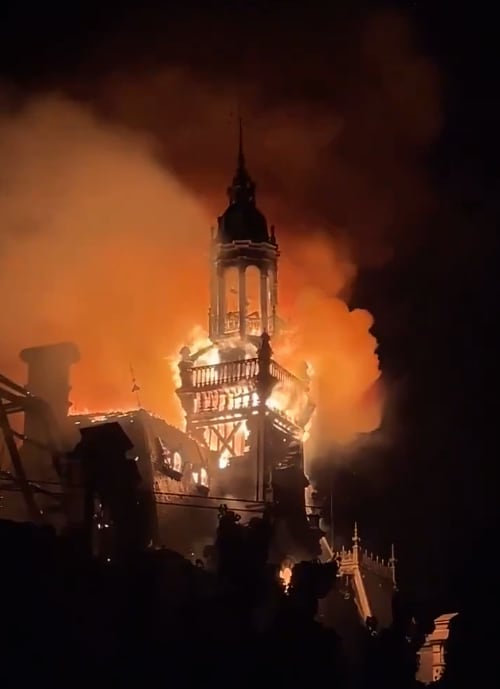
The protests spread from working-class suburbs around Paris to major cities including Marseille, Bordeaux, Lyon, Nice and Strasbourg.
One compilation begins with footage of a burning bus presented as part of the violence in France. The video, however, shows a school bus that caught fire in Nimes, a city in southern France, in 2022. No casualties were reported in that incident.
Jones also alleged that Catholic institutions and clergy are being targeted during the protests. In one video, he says he has seen “at least a dozen videos of Catholic priests being set on fire,” without any evidence.
Similarly, Robinson has shared videos of unrest in France while arguing against immigration and warning that developments there could be repeated elsewhere in the West. In one post, Robinson described the situation as evidence of a “green/Islamic holy alliance” spreading through Western Europe and the United States.
Phrases like “France has fallen”, “occupied France”, “invasion of France’, etc. have become common occurrences in right-wing spaces online. But none of the arguments against the protests mentioned why the protests are happening in the first place.
Why Is France Protesting
The protests spread from working-class suburbs around Paris to major cities including Marseille, Bordeaux, Lyon, Nice and Strasbourg. The student-led movement is demanding better schools and lower cost of living. The protests over overcrowded classrooms and deteriorating school buildings have since been overshadowed by looting, arson and violent clashes between protesters and police.
In Paris, police described the number of arrests as unprecedented, while the authorities in Limoges, nearly 400 km south of the French capital faced the aftermath of a fire that partially destroyed the city’s historic town hall, a building dating back more than 140 years. Elsewhere, shops and supermarkets reported heavy losses after masked groups broke in, and public buildings and police vehicles came under attack in several cities.
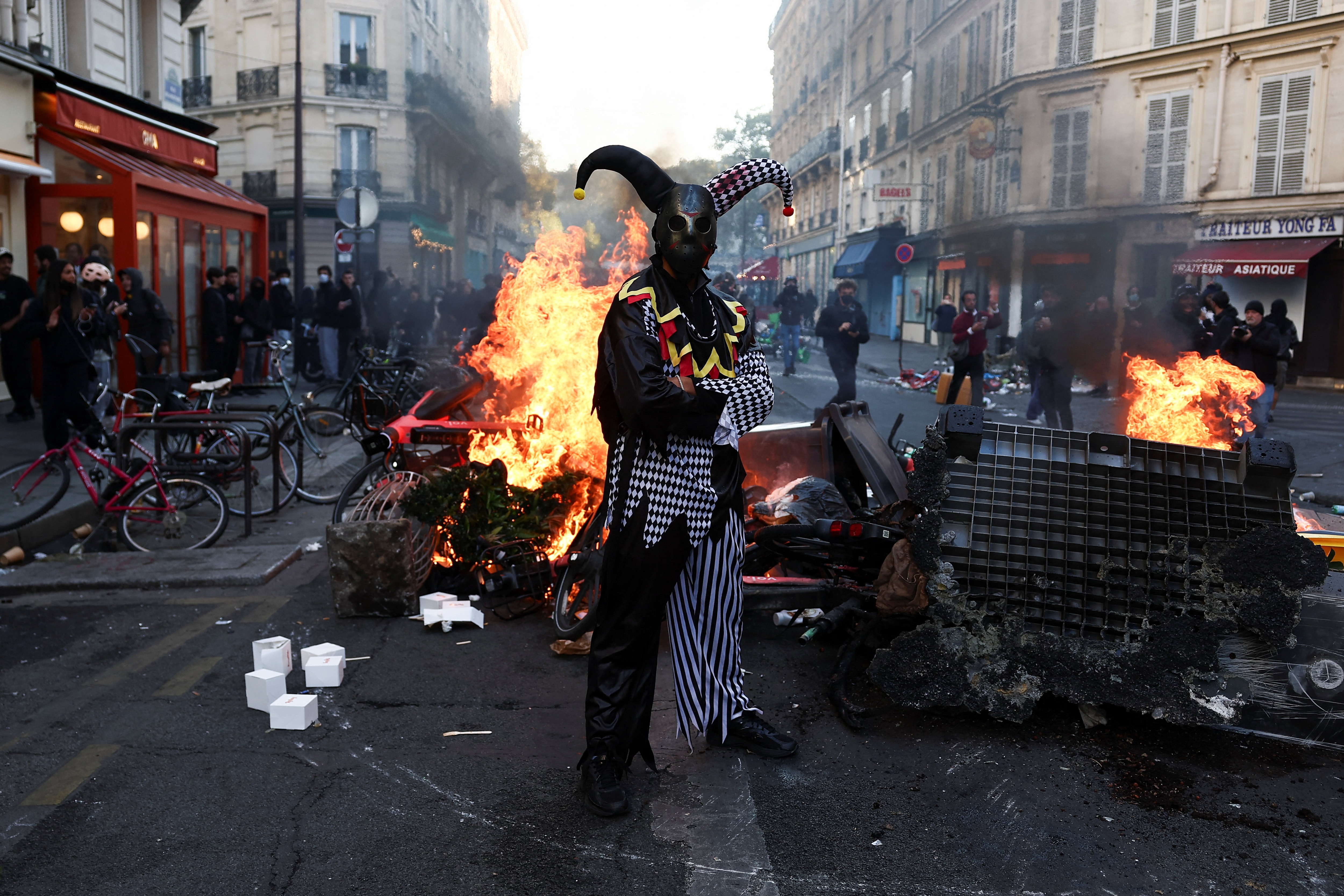
President Emmanuel Macron condemned the destruction and promised prosecutions for anyone who attacked public buildings, looted businesses or vandalised town halls.
Photo Credit: AFP
President Emmanuel Macron condemned the destruction and promised prosecutions for anyone who attacked public buildings, looted businesses or vandalised town halls.
“No room for violence in our Republic,” he wrote on X.
Teachers, parents, university students and union leaders soon joined the movement. Rising prices, squeezed household budgets and anger over how public money is spent pulled in people whose grievances went well beyond education. Left-wing parties backed the students, and social media amplified their demands.
The images and videos from the past several days have shown tear gas, burning vehicles and barricades constructed from bicycles and rubbish bins. In Paris, tourists were seen running with their suitcases through streets affected by tear gas and clashes, while shops in several cities were ransacked by masked groups.
France’s Long History Of Protests
The French Revolution of 1789 challenged the monarchy and the privileges of the established order. Subsequent generations of protesters have invoked that legacy, even when their demands and political objectives have differed significantly.
Even before that, in 1358, two years after France’s crushing defeat at Poitiers, peasants near Compiegne rose up against the nobility’s demands for higher dues from communities that were already impoverished. The revolt became known as the Grande Jacquerie. The word comes from Jacques Bonhomme, a sneering nickname for the supposedly simple-minded peasant, and it has described rural uprisings ever since.
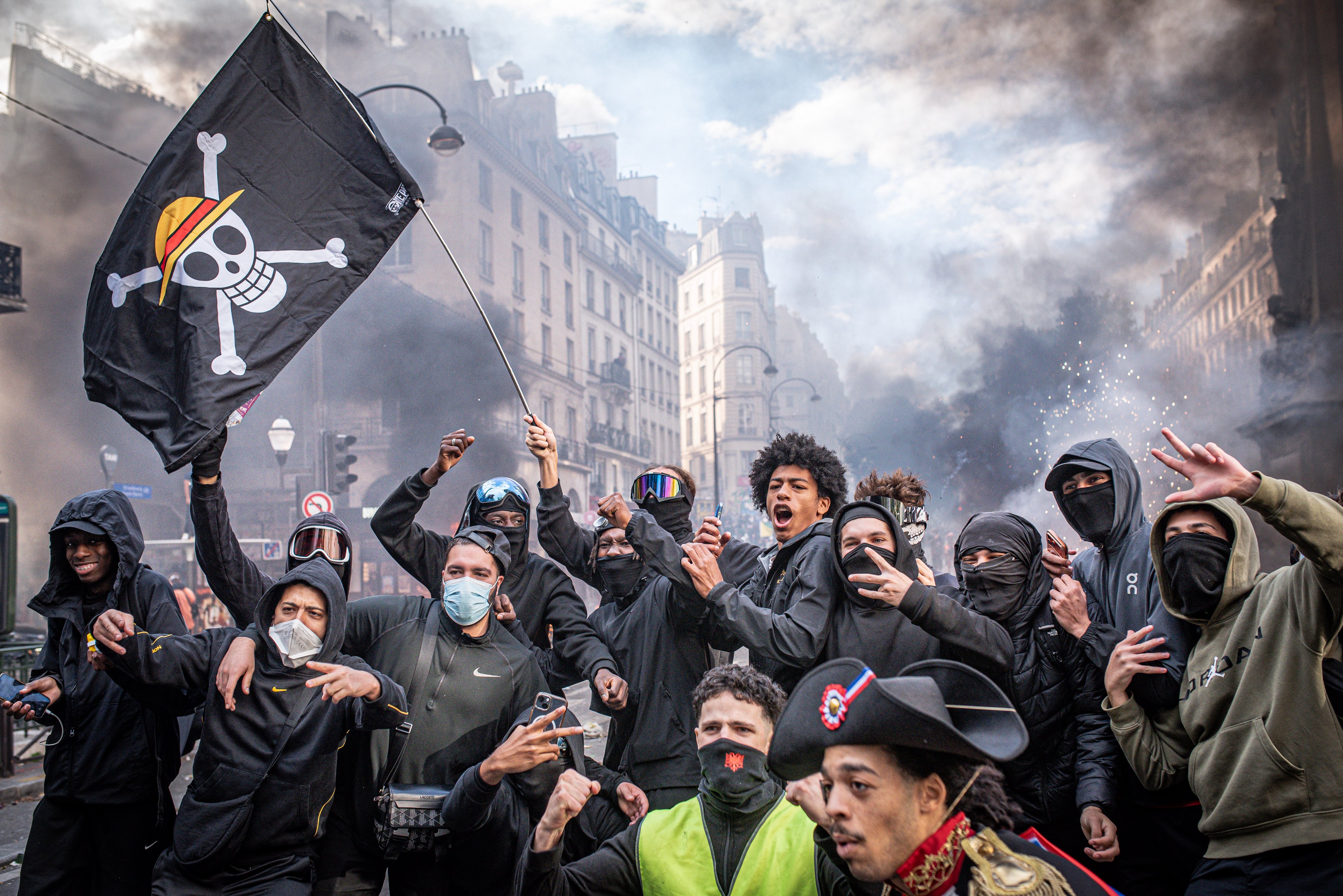
Shops and supermarkets reported heavy losses after masked groups broke in, and public buildings and police vehicles came under attack in several cities.
Photo Credit: AFP
Castles were destroyed and their inhabitants killed, while the nobility then hit back with force and crushed the rebellion. Historians estimate that as many as 20,000 rebels died, though no one knows the true figure.
The term resurfaced in discussions of the Yellow Vest movement in 2018, when protesters from rural and urban working-class and lower-middle-class communities protested against a planned increase in fuel taxes. The yellow high-visibility vests worn by motorists in emergencies became the movement’s defining symbol.
The expectation that protests can produce tangible results has also helped sustain the tradition. Demonstrations in the 1930s helped win worker protections that remain politically touchy today, and later movements have forced governments to back down or rethink.
Critics of government concessions have sometimes dismissed them as a smoke screen, arguing that temporary adjustments do not address the structural problems that prompted protests in the first place. Nevertheless, the belief that demonstrations can influence government decisions remains a powerful feature of French public life.
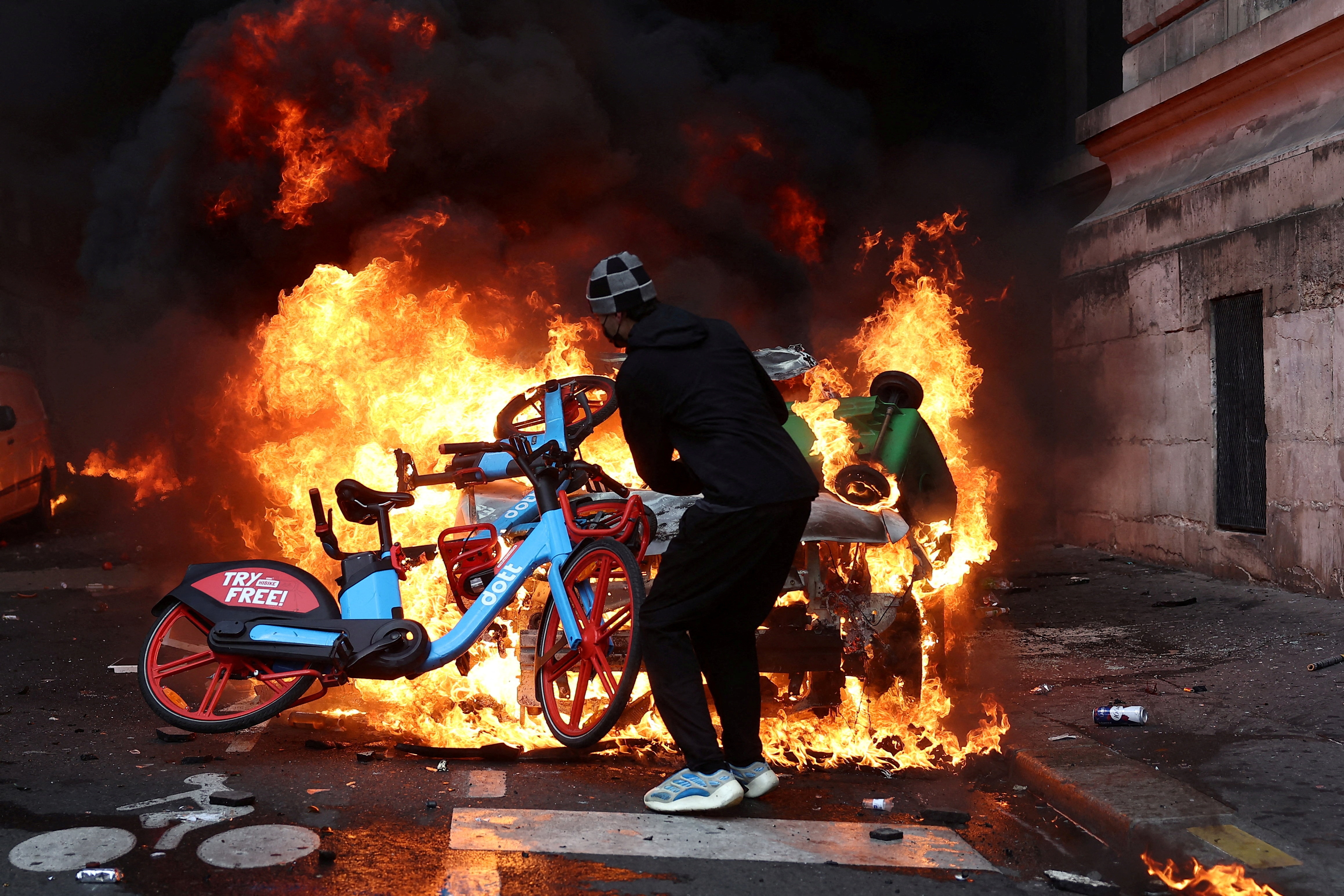
The images and videos from the past several days have shown tear gas, burning vehicles and barricades constructed from bicycles and rubbish bins.
Photo Credit: AFP
For all the historical precedents, the most immediate reference point for many of France’s student movements remains May 1968, when demonstrations by university students expanded into a national crisis and transformed the country’s political and social landscape.
“We’re the heirs of May ’68,” read a banner outside a school during the current protests.
The July Revolution of 1830 had ended the Bourbon Restoration and established a constitutional monarchy under Louis-Philippe I. The Revolution of 1848 subsequently overthrew that monarchy.
In 1871, following France’s defeat in the Franco-Prussian War, the Paris Commune briefly established a radical revolutionary government in the capital.
These episodes provided the historical imagery through which many students understood their own actions.
