Following the defection of seven Aam Aadmi Party (AAP) Rajya Sabha MPs to the BJP, the political atmosphere has heated up across a wide arc, from Punjab to Delhi, and Goa to Gujarat.
According to senior BJP leaders, the party has hit several targets with a single arrow. All eyes are fixed on the question whether the split in the AAP’s Rajya Sabha contingent would encourage its MPs in the Lok Sabha and MLAs in Punjab and Delhi to make a move?
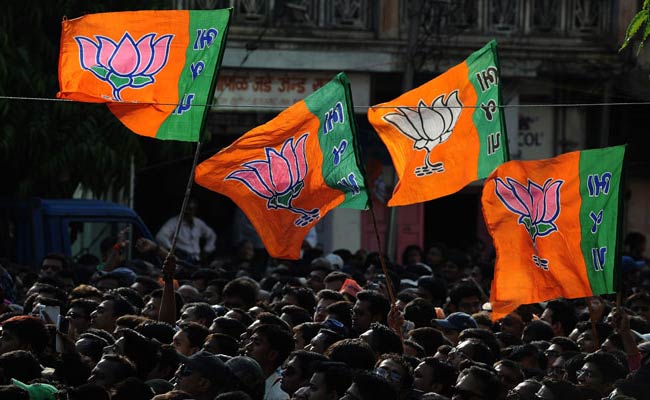
This apprehension has been plaguing the AAP for quite some time. This is precisely why party leaders have repeatedly alleged the BJP intends to dismantle the AAP by carrying out “Operation Lotus”. The far-reaching consequences of Friday’s developments cannot be denied, particularly given that the BJP has its sights set not only on Punjab but also on the upcoming assembly elections in Gujarat and Goa.
While the attention of all political observers was focused on West Bengal, the BJP true to its signature guerrilla warfare style quietly executed its preparations for the next electoral cycle.
At a time when Home Minister Amit Shah has been camping in Kolkata, personally taking command of the election preparations there, a third generation of BJP leaders operating under his guidance orchestrated the political coup in the national capital, the repercussions of which will be felt for a long time to come.
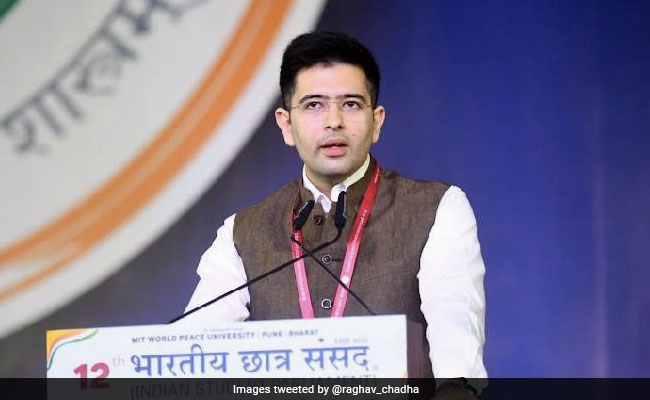
According to sources, the BJP started laying the groundwork for this major move within the AAP well in advance. Swati Maliwal had been in contact with the BJP leadership for a considerable period; she had even openly supported the BJP during the Delhi assembly election.
The BJP also had its eyes on Raghav Chadha, as his demeanor and public conduct signalled that he was dissatisfied with the AAP leadership. However, Chadha’s growing proximity to the BJP did not sit well with Maliwal, who feared that he might end up receiving greater prominence than herself.
Nevertheless, in order to secure the requisite number of seven MPs needed to trigger a formal split within the Rajya Sabha parliamentary group, they were instructed to coordinate their efforts. For the BJP, the biggest catch of all is Sandeep Pathak, who holds the pivotal position of general secretary (organisation) within the AAP.
In the last Punjab assembly elections, he and Raghav Chadha were responsible for allocating almost all the tickets. He maintains direct contact with every MLA in Punjab. He was displeased by the fact that his role in Punjab had been curtailed, with all the reins of power handed over to former Delhi deputy chief minister Manish Sisodia.
Among the other four MPs, Ashok Mittal came under pressure following raids by the Enforcement Directorate (ED). Vikramjit Sahney had publicly expressed his admiration for Prime Minister Narendra Modi. Harbhajan Singh openly declared he would participate in the Ram temple consecration ceremony in Uttar Pradesh’s Ayodhya. As a Rajya Sabha MP, he prioritised issues related to sports over politics. Billionaire businessman Rajinder Gupta largely kept himself aloof from politics; notably, he supported the India-US trade agreement despite the party’s opposition to it.
According to BJP leaders, the strategy is clear – the party intends to use Chadha and Pathak to weaken the AAP in Punjab. Chadha was once referred to as the “super chief minister” of Punjab. The assembly elections in Punjab and Goa are due in February 2027. Given this timeframe, the possibility of a mass exodus or “stampede” among AAP MLAs just before the elections can’t be ruled out, though a formal split within the legislative party itself appears unlikely as such a move would need the support of 61 MLAs.
Similarly, in Delhi, the AAP currently holds 22 seats; engineering a split there would require the support of 15 MLAs.
The BJP asserts that its immediate objective is to expand its electoral base in Punjab, where it holds only two seats in the assembly. In the previous assembly elections, it got a mere 6.5 per cent of the vote share. While its vote percentage rose to 18.5 per cent during the 2024 Lok Sabha elections, the party failed to win a single seat. The BJP has decided that, once again, it will contest the upcoming elections independently.
Party leaders have categorically ruled out the possibility of forming an alliance with the Shiromani Akali Dal. The party’s strategy involves projecting Chadha as its face in urban areas and Ravneet Bittu in rural regions. Through Chadha and Pathak, the BJP intends to reach out to the AAP’s MLAs and try to win them over to its side during the elections.

This is precisely why the defection of the seven AAP Rajya Sabha MPs, who have ties to both Punjab and Delhi, has given the BJP a significant boost in Punjab. The setback suffered by the AAP just ahead of the voting for local body elections in Gujarat is also considered highly significant. The elections covering 15 municipal corporations, 84 municipalities and 34 district panchayats feature a three-way contest between the BJP, the Congress, and the AAP.
The AAP has called the local polls the “semifinal” for the 2027 assembly election. Both Arvind Kejriwal and Punjab Chief Minister Bhagwant Singh Mann campaigned for the elections.
In 2021, the AAP surprised everyone by winning 27 seats in the Surat Municipal Corporation; the party is striving to replicate that performance. Its growing influence in South Gujarat and the Saurashtra region has become a cause for concern for the BJP.
In Goa, the AAP got two seats and 6.77 per cent of the vote in the last assembly elections. The AAP has made a foothold in the Christian-majority and coastal regions of South Goa. In the last Lok Sabha elections, it supported the Congress, leading the Opposition INDIA bloc to win the South Goa parliamentary seat.
On the whole, the number of BJP MPs in the Rajya Sabha will rise to 113, and the NDA is nearing the 150-mark. This will make it easier for the Modi government to get key bills passed in the upper house. Consequently, this is being hailed as a major masterstroke for the BJP.
