The war in Iran could end “within maybe two weeks“, Donald Trump teased early April 1 when reporters pressed him on the impact of fighting on high fuel prices worldwide.
The US President signalled he could do so without a deal to re-open the Strait of Hormuz, potentially leaving the world mired in an energy crisis his administration triggered over a month ago.
His call for countries to ‘get their own oil’ – seen as a snapback after allies ignored his calls for military aid to re-open the strait – and remark ‘we’re not going to have anything to do with it (the Hormuz) signalled potential disengagement from the fighting.
Assuming this is true – that the war will end in two weeks – it will be another six to eight weeks before oil production is restored to pre-war levels and Hormuz tanker traffic is normalised. This is because, as an early-war Thomson Reuters report noted, there is a minimum two to four week lag in impact, meaning “the pain from today’s anchored tankers has not yet arrived”.
‘2 weeks before any normalisation begins’
Macquarie Group strategist Vikas Dwivedi said: “It would probably take a couple of weeks before things even start to normalise… you have to get the stored oil, which has built up to high levels, on to ships so you can restore production. And that (restoring production) would take a few more weeks.”
Repairing and re-building energy infrastructure damaged by Iranian, US or Israeli air strikes will take more time, Dwivedi warned, particularly since the extent of damage remains unclear.
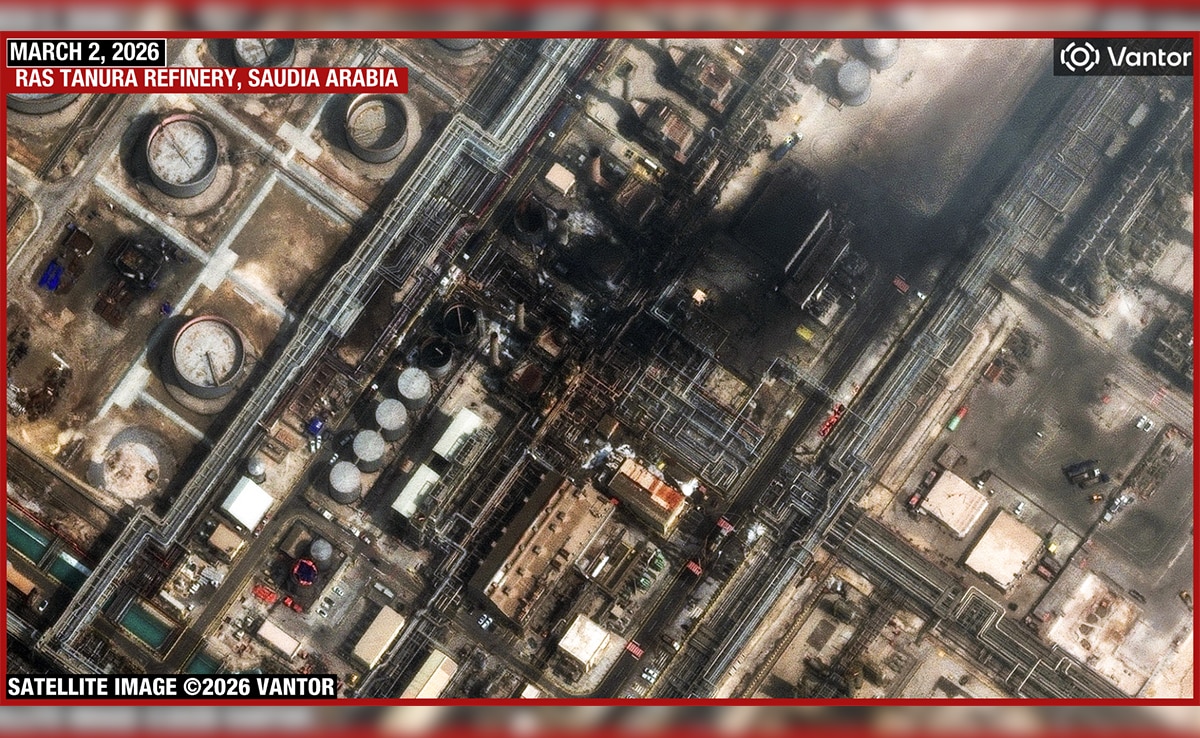
Iran attacks damaged Saudi Arabia’s Ras Tanura oil refinery. For high-res image, click here
“Some of it will be very quick. Some damage by drones, as we’ve seen in Ukraine, can be fixed very quickly, i.e., days to a couple of weeks. Other damage… we’re not clear on what happened.”
“If it is a big process unit… that could be like a bespoke project to fix, then that could take several months. It could even take a year,” he told Yahoo Finance.
Post-war mine, clean-up challenge
This timeline could be further complicated by logistics like clearing mines, which is itself a dangerous and time-consuming task. Reuters reported in early March Iran had deployed several Maham-3 and Maham-7 mines in a channel that is only 33km wide at its narrowest point and has just two designated shipping lanes, each 3.2 to 3.7 km wide, with a buffer in the middle.
It could also be complicated by the need to clear debris from vessels that were attacked.
The shipping costs challenge
Another factor is charter rates for VLCCs, i.e., very large crude carriers, hired by refineries to haul crude from Gulf export hubs. The fighting spiked charters to over US$400,000 a day.
In fact, reports indicated an India-bound tanker paid US$770,000 a day in early March.
“This is an insanely high rate. US$100,000 and above is a strong rate and we called that a ‘strong market’ last year,” Erik Grundt, a senior analyst at Norway-based Rystad Energy, was quoted by The Hindu.
And charter rates are only part of the shipping cost. The others are fuel, port charges, canal costs, and others, all of which could add up to another US$50,000 daily, Grundt said.
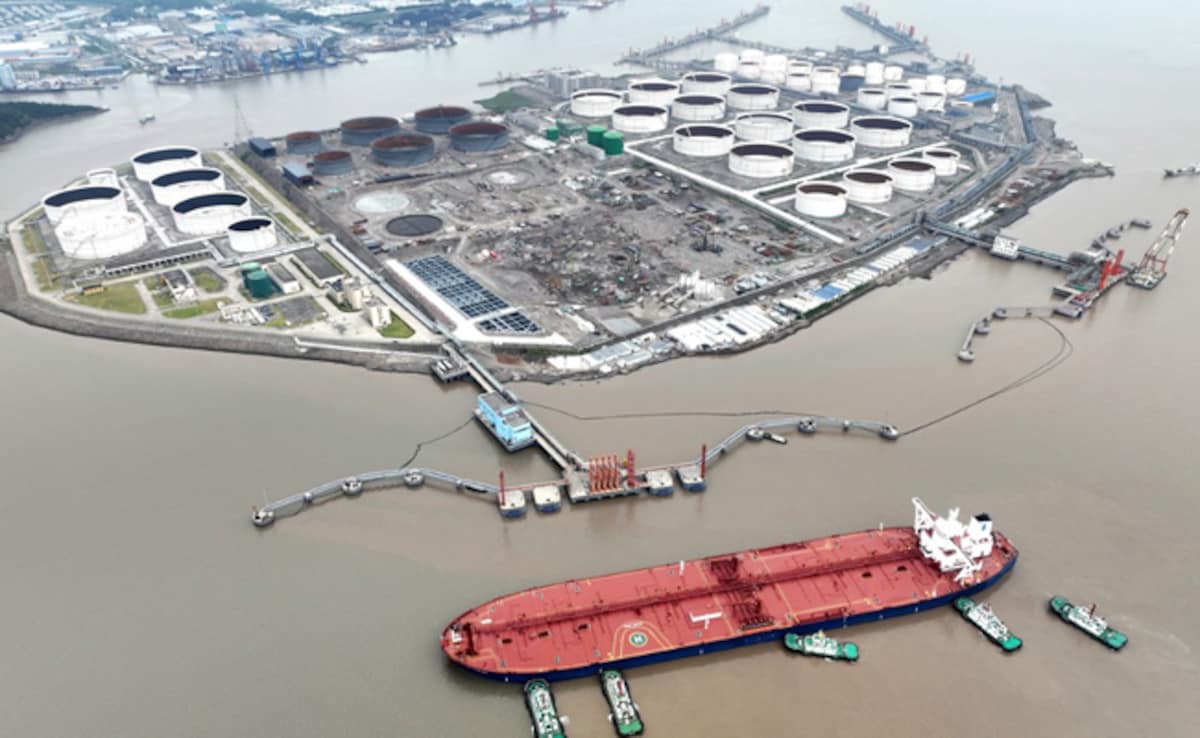
VLCC charter rates also need to normalise for the oil supply crisis to ease (File).
Shipping rates spooked by the war and the Hormuz blockade will take time to settle, and will need demonstrable safe passage of VLCCs (and loading operations before that) to do so.
This will take two to four weeks and could take up to six, expert said, factoring in marine insurance recalibration and logistics of re-routing traffic via the Cape of Good Hope, i.e., around Africa.
All of this, though, is a ‘best case scenario’.
If fighting continues
In case the war does not end, normalisation could take weeks more, or even months. Each additional week could extend supply and price recovery timelines by another one to two weeks.
This is based on data on stalled production, a build-up of reserves and a pile-up of tankers, as well as increasingly jittery markets and modelled by the Federal Reserve Bank of Dallas.
Data modelled by the US’ Energy Information Administration implied that a 13-week closure (the war is already nearing a sixth week) could take as much as eight weeks to recover.
Extended shutdowns also affect shipping costs. And the longer the shutdowns the longer the recovery timelines; at 26-weeks it runs to three, maybe four, months before oil exports and prices are normalised.
And the Houthi threat
Meanwhile, recovery is also tied to the threat of another front in the war after Yemen-based Houthi rebels seemed to signal their entry into the fighting by firing missiles at Israeli bases.
Houthis Threaten Strait No 2 As Iran War Expands. What It Means For India
The Houthis threaten shipping via the Bab al-Mandab Strait to the west of the Hormuz, across the Arabian Peninsula. This is a smaller channel but one that could ease export pressure.
However, if the Houthis step in, not only will it shut but prices will be dealt a second shock.
A combined chokehold could add two-three months recovery for each month of fighting.
What led to this crisis
US-Israel attacks on Iran that began Feb 28 turned the oil-exporting Gulf region into a reluctant warzone, unleashing violence that included missile attacks on energy infrastructure in Iraq, Saudi Arabia, the United Arab Emirates, and Qatar, and drove up global oil and gas prices.
Tehran’s response – to blockade the Hormuz, a chokepoint that ships 20-25 per cent of the world’s seaborne crude – scared benchmark Brent past the US$100 a barrel redline – peaking at US$119.5 midday March 9 – and pushed average gasoline prices past US$4 a gallon (Rs 99 per litre) in the US and by 15-17 per cent in France, Germany, and other European nations.
India’s exposure has been limited so far, even though pre-war it shipped 40-50 per cent of its oil requirements – i.e., 5.5 to six million barrels a day – from Gulf nations via the Hormuz.
Regular fuel and gas prices are static, for now, on the back of diversified sources and release of strategic reserves, though premium petrol and commercial gas prices spiked. The government also said a hike in jet fuel prices would be partially absorbed to protect domestic arifares. It also slashed federal excise duties to shield OMCs from rising crude prices.
However, smaller Asian nations like Pakistan, Bangladesh, the Philippines, and Sri Lanka, were less fortunate.
Each announced various degrees of emergencies and ration fuel and gas. Prices also spiked in China – a major buyer of Iranian oil – by nearly 20 per cent since the war began.
