US President Donald Trump’s 48-hour deadline – for Iran to fully reopen the Strait of Hormuz to seaborne energy trade – expires Tuesday at 5.14 a.m. IST, and risks significant escalation in regional fighting and the complete shutdown of a critical global energy supply chokepoint.
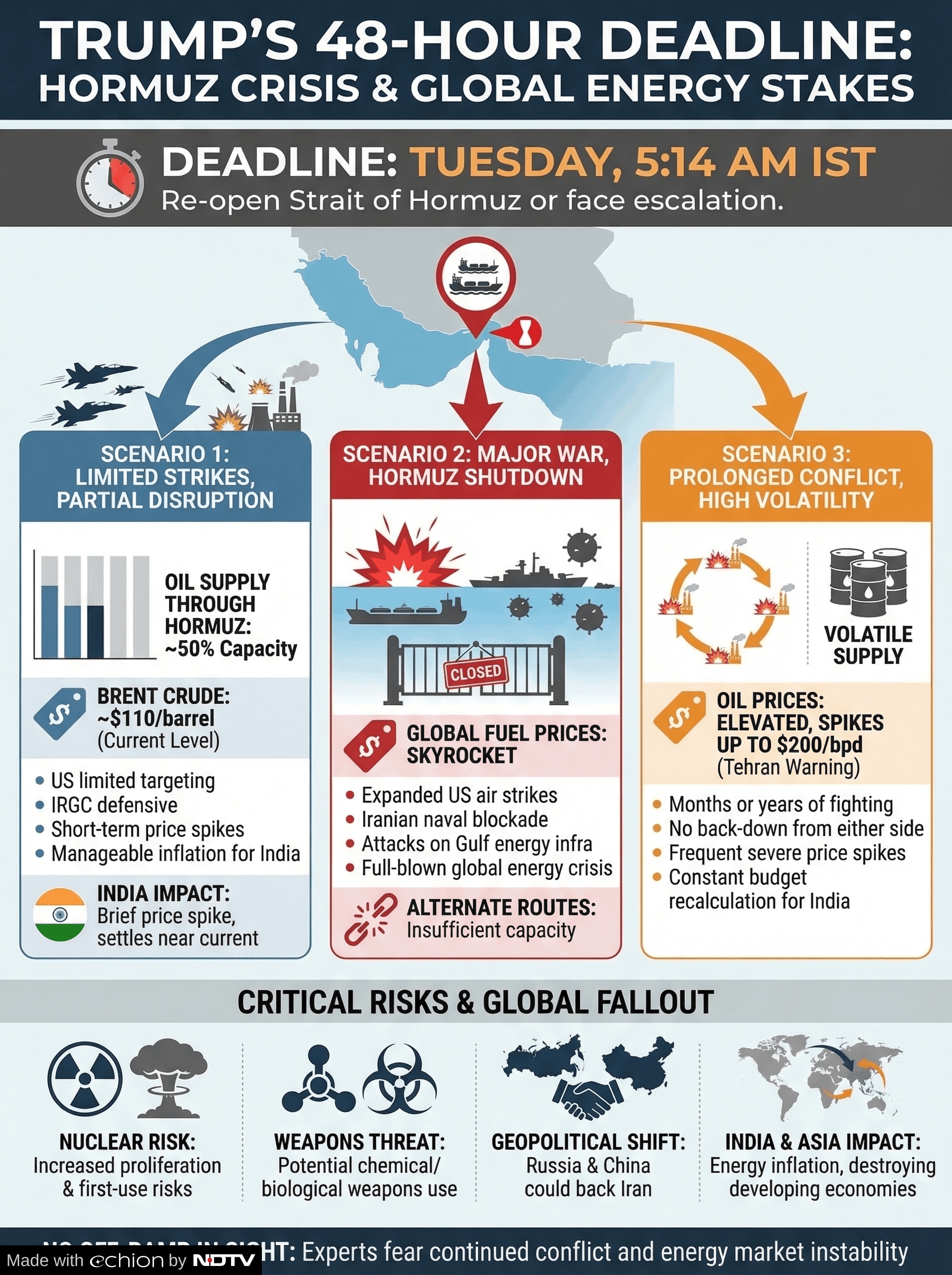
A ceasefire – the ideal solution – seems unlikely without major concessions from either side, while continued fighting threatens further price shocks to a global energy market already in crisis, with Brent crude around the US$110 a barrel mark.
For India, the question is can the US, and Iran, delink the global energy trade from hostilities.
Trump’s Hormuz deadline, the 2 big ‘what if’ questions
If Tehran allows tankers through the Hormuz, even at 50 per cent of pre-war capacity, it should mean manageable energy inflation for crores of Indian middle-class and lower middle-class households, and crores more fighting poverty. It will also give the ruling BJP valuable breathing room as it preps for high-stakes elections in Bengal, Tamil Nadu, Assam, and Kerala.
If Tehran does not, and Trump follows through on his threat to “hit and obliterate their various POWER PLANTS, STARTING WITH THE BIGGEST ONE FIRST” it will likely lead to a sharp increase in the fighting and a shutdown of oil and gas transiting the Hormuz, as well as risking regional escalation in fighting.
The Iranian military has already threatened to counter strikes on its power plants with attacks on American-operated energy and desalination infrastructure in the area.
That threat and counter-threat follow less than 24 hours after Trump spoke of ‘winding down’ the war, underlines geopolitical and military experts’ fears – there is no off-ramp in sight, at all.
Scenario 1: Limited US strikes, partial energy supply disruption
Its deadline snubbed, Washington could maintain short term status quo, i.e., continue limited targeting of Iranian military and energy infrastructure, enough to keep the IRGC on the defensive but not enough to provoke regime change or force the current administration in a corner.
Tehran would respond similarly, continuing its asymmetric and harassment warfare model that continues to make seaborne energy trade in the Hormuz a risk-laden activity.
This would effectively mean energy markets remain primed for explosion, forcing countries to ration fuel and gas, and feeding long-term shortage fears and price hikes into the system.
For India this could mean a brief spike in prices as Brent crude and other benchmarks respond fearing immediate escalation, and then settle to Brent’s current US$110 per barrel mark.
trump hormuz deadline three options graphic
Scenario 2: Major regional war, Hormuz shuts down
The potential worst-case scenario.
If Tehran were to explicitly refuse the deadline Trump might be pushed into expanding scope of American air strikes, targeting Iranian energy infrastructure, specifically power grids, and disabling air defences ahead of a possible ground invasion.
Tehran would likely respond by shutting the Hormuz completely, potentially mounting a naval blockade that would include warships, anti-ship missiles, and sea mines, adding a long-term threat (post-war) to tanker traffic from undiscovered submarine ordnances.
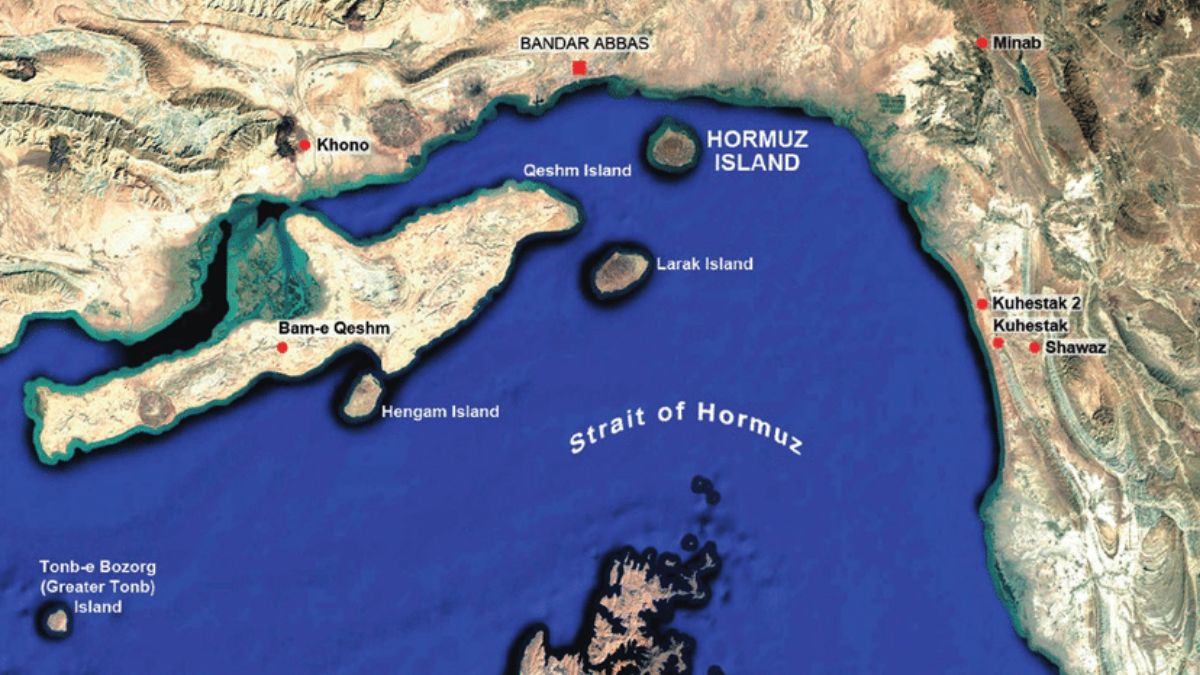
From that perspective, American strikes on Iran’s Qeshm Island, its underground ‘missile city’ appear significant, paving the way, as it were, to a full-scale assault on Hormuz defences.
Qeshm Island in Strait of Hormuz
Tehran would likely also ramp up its attacks on Gulf energy infrastructure; it has already shown a willingness to target oil and gas fields, and refineries and depots to put pressure on the US.
The increased fighting risks regional escalation, particularly if Iran-targeted Gulf nations are forced into offensive postures rather than their current defensive ones.
The second scenario translates into a full-blown global energy crisis, forcing fuel prices to skyrocket and destroying developing economies, particularly in Asia.
The Hormuz, why it is critical
It carries 20 per cent of the world’s seaborne oil and a significant amount of its gas supplies. Alternate routes are being explored, including overland pipelines in Saudi Arabia and the UAE, but none, so far, extract similar quantities from the region.
Hormuz Shutdown Affects Asia’s Crude Oil, Pipelines Can’t Cover Loss
This, in turn, increases nuclear proliferation and first-use risks, and even the threat of radiation as a fallout of a direct American or Israeli attack on one of Iran’s nuke facilities. Even if that does not happen, increased fighting leads to more internal instability with the IRGC – that some analysts believe has been running on autopilot since Ali Khamenei’s death.
A full-blown war will likely also force Saudi Arabia and the UAE (and the West) to publicly back the US and Israelis. That, in turn, could prompt the Russians and Chinese to Tehran’s side.
Oil, gas prices and India’s concern
Pre-war India got around 2.6 million barrels of oil per day from the Gulf, with around 50 per cent of that coming via Hormuz. India also imports around 80 per cent of its LPG needs from Qatar.
The government has said it is working on alternate supplies, including going back to Russian crude and leaning on increased domestic production to offset LPG cylinder shortages.
But the energy inflation that will follow more war will disrupt, if not destroy, household food, transport, and gas budgets, particularly with the rupee already falling against the dollar.
A third option: War that doesn’t ends, or explode
A potential worst-case scenario is if the fighting continues into months or years, much as it has happened in Ukraine, with neither side willing to back down or escalate attacks to find a potential checkmate move.
This would mean global oil prices stay elevated, possibly higher than they are currently, and suffer from frequent (and severe) spikes; these could even push it close to the US$200 bpd Tehran warned of in early March.
For India that would mean having to constantly calculate and re-calculate energy budgets and fuel prices and subsidies, and unreliable crude supplies will have a knock-on effect on refineries trying to juggle between the different kinds of the incoming raw material.
NDTV is now available on WhatsApp channels. Click on the link to get all the latest updates from NDTV on your chat.
