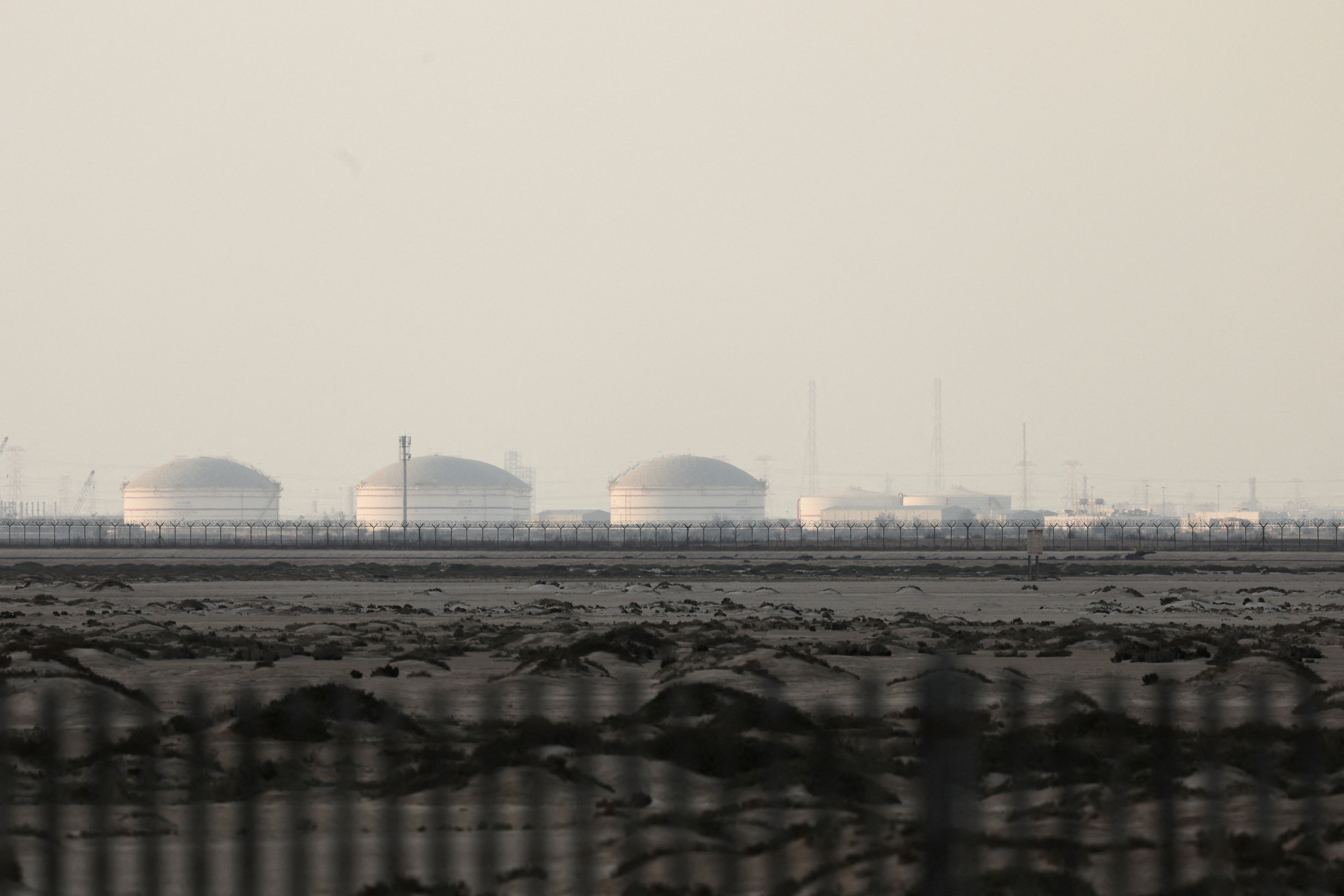
Turmoil in international oil and gas markets has intensified following an Iranian missile attack on Ras Laffan, Qatar’s largest Liquefied Natural Gas (LNG) plant.
The Gulf has borne the brunt of Iran’s reprisals for the US-Israeli strikes that sparked the Middle East war. Tehran has targeted US assets while also striking energy facilities, drawing fury from the region’s hydrocarbon-rich monarchies.
As a direct result of the strike on the world’s largest LNG facility, production at the site has been completely halted.
Qatar ranks as one of the world’s top LNG producers alongside the United States, Australia, and Russia. This is not the first disruption; in the first week of March, Iran launched missile attacks on Qatari gas fields, compelling QatarEnergy, the world’s largest natural gas exporter, to suspend production. These strikes are reportedly in retaliation for an Israeli strike on Iran’s South Pars gas field, part of the world’s largest natural gas reservoir.
Energy prices have spiraled since tanker traffic through the Strait of Hormuz, which typically carries a fifth of the world’s oil, was brought to a near-standstill by the threat of further attacks.
Since the conflict began on February 28, US and Israeli forces have targeted the Islamic Republic’s leadership in a string of strikes, most recently killing intelligence chief Esmail Khatib.
While thousands have been reported killed in Iran, Tehran continues to unleash missile and drone attacks across the Middle East while throttling global energy supplies.
Now in its third week, the war has turned the Strait of Hormuz into a war zone, leaving more than 700 cargo vessels stranded in safe zones surrounding major Middle Eastern ports.
How It Impacts India
This situation is having a particularly profound impact on nations like India, which procures approximately 50% of its natural gas requirements from the international market. Significantly, India imports roughly 20% of its natural gas requirements from Qatar.
“India imports 50 percent of its natural gas requirements from the international market. Of this, we purchase approximately 40% of our LNG from Qatar, meaning that roughly 20% of India’s total LNG imports originate from Qatar. India will need to curtail its gas consumption; specifically, gas usage within the industrial sector, and particularly in the power sector, will have to be reduced,” according to energy economist Kirit Parikh.
Currently, India’s daily natural gas consumption stands at 189 Million Metric Standard Cubic Meters per Day (MMSCMD). Out of this, 97.5 MMSCMD is produced domestically.
As of last week, supplies amounting to 47.4 MMSCMD, representing a portion of India’s total natural gas imports, were disrupted due to force majeure conditions.
Consequently, state-owned gas companies placed orders for LNG cargoes from alternative new sources.
