In hindsight, it seems the United States President and his deputy played ‘good cop, bad cop’ to work through Israel’s concerns and negotiate a two-week ceasefire in their war on Iran.
Increasingly aggressive rhetoric by Donald Trump – calling Iranians “crazy ba****ds” and his “a whole civilisation will die tonight” posts – overlaid a behind-the-scenes role for JD Vance, which included talks with Pakistan’s Shehbaz Sharif, Reuters said, to convince Ayatollah Mojtaba Khamenei to stand down.
That Vance was involved in the ceasefire talks is not news; the Vice-President of the US was always going to be part of the senior leadership team involved in this military engagement.
Last week sources close to the negotiations told Reuters he spoke directly with Sharif.
But reports now suggest the man from Middletown, Ohio, likely played a key role, one facilitated by Tehran’s preference in dealing with him rather than any other Trump emissary, including Steve Witkoff, the US’ special West Asia envoy, or Jared Kushner, the President’s son-in-law.
Reluctant over war, Vance steps into ‘peacemaker’ role
Back in mid-March, when any prospect of a ceasefire seemed remote, US publication Axios said Vance had begun having a series of conversations with Israel’s Benjamin Netanyahu and the leaders of Gulf states, including the UAE and Saudi Arabia, that had been dragged into the war.
At least three other publications – The New York Times, Politico, and The Hill – had already flagged the Veep as a sceptic of the Iran war.
Vance, an ex-Marine who fought in Iraq, was reportedly unconvinced by Israel’s ‘regime change’ push and thought West Asia military action at this time would be “a huge distraction of resources” and “massively expensive” for the US.
Trump’s endorsement pivotal as deadline loomed
These views were expressed to Trump but he was unfazed and the war began.
More importantly, it did not mean Vance was dropped from the inner circle.
That was underlined Monday by Trump, who told reporters, “Marco (Secretary of State Marco Rubio, JD (Vance)… we have a number of people doing it (handling ceasefire talks).”
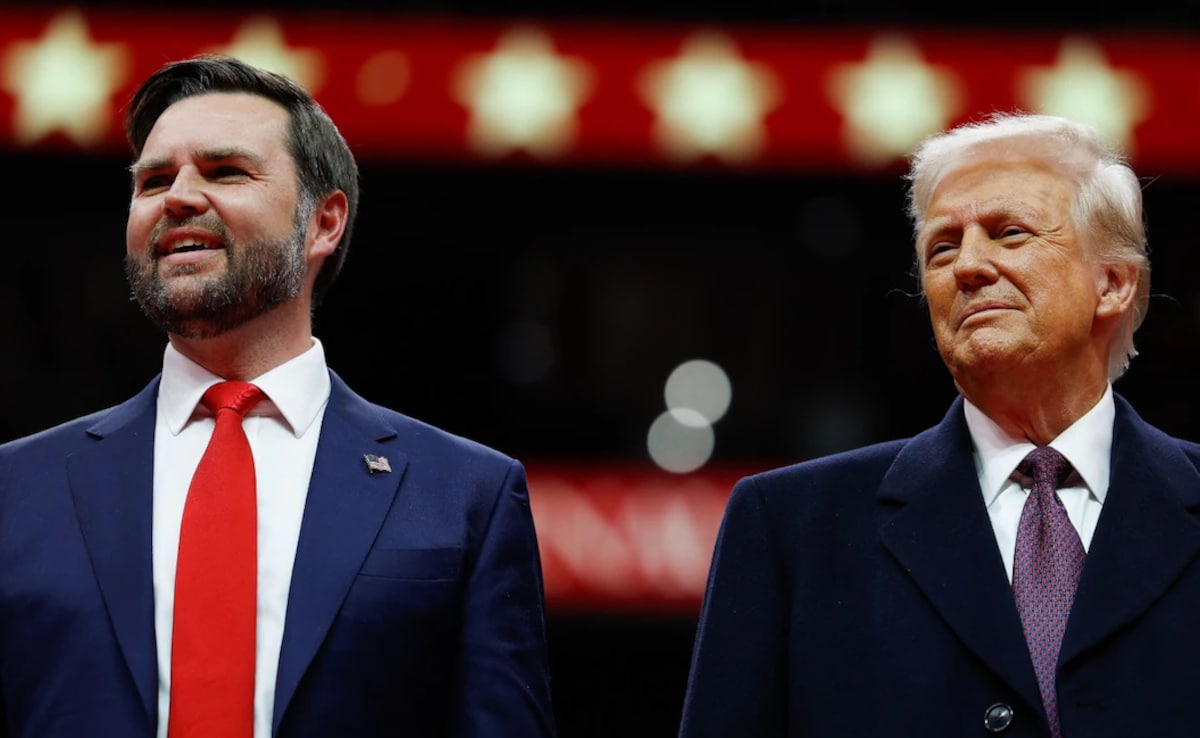
JD Vance (L) and Donald Trump (R) (File).
The endorsement was critical; Trump, by then, had hurled multiple insults and dire threats at Iran, and the entire West Asia region was on the brink of a potentially devastating escalation.
Hours before his deadline Trump upped the ante further; “A whole civilisation will die tonight, never to be brought back again. I don’t want that to happen, but it probably will,” he said.
Iran responded with similar ferocity.
Simultaneously, away from the spotlight Vance was working with Sharif, Pak Army chief Field Marshal Asim Munir, and Iran officials to hammer out a ceasefire.
And this is where Trump’s Monday backing was likely key.
Iran had already been burned, twice, by Trump’s flip-flop – once in June 2025, before the 12-Day War, and again in the build-up to this round of fighting. Each time, Iran felt, the US had attacked despite apparent progress, leading to feelings of betrayal and distrust of Witkoff and Kushner.
In fact, after the Feb 26 talks in Geneva flopped, Iran flatly refused to deal with either.
Vance, on the other hand, was a known sceptic of the war and had a direct line to Trump.
By this time the US also recognised Vance as its best bet. “If the Iranians can’t strike a deal with Vance, they don’t get a deal. He’s the best they’re gonna get,” a senior Trump official told Axios.
So, when the Vice President urged Tehran to agree a deal, warning them that Trump was prepared to escalate attacks on public and energy infrastructure, they listened.
Having pulled this off, Vance’s prestige within the US administration has been boosted, and he will almost certainly be a key member of any further talks with Iran, including that scheduled in Islamabad on Friday.